

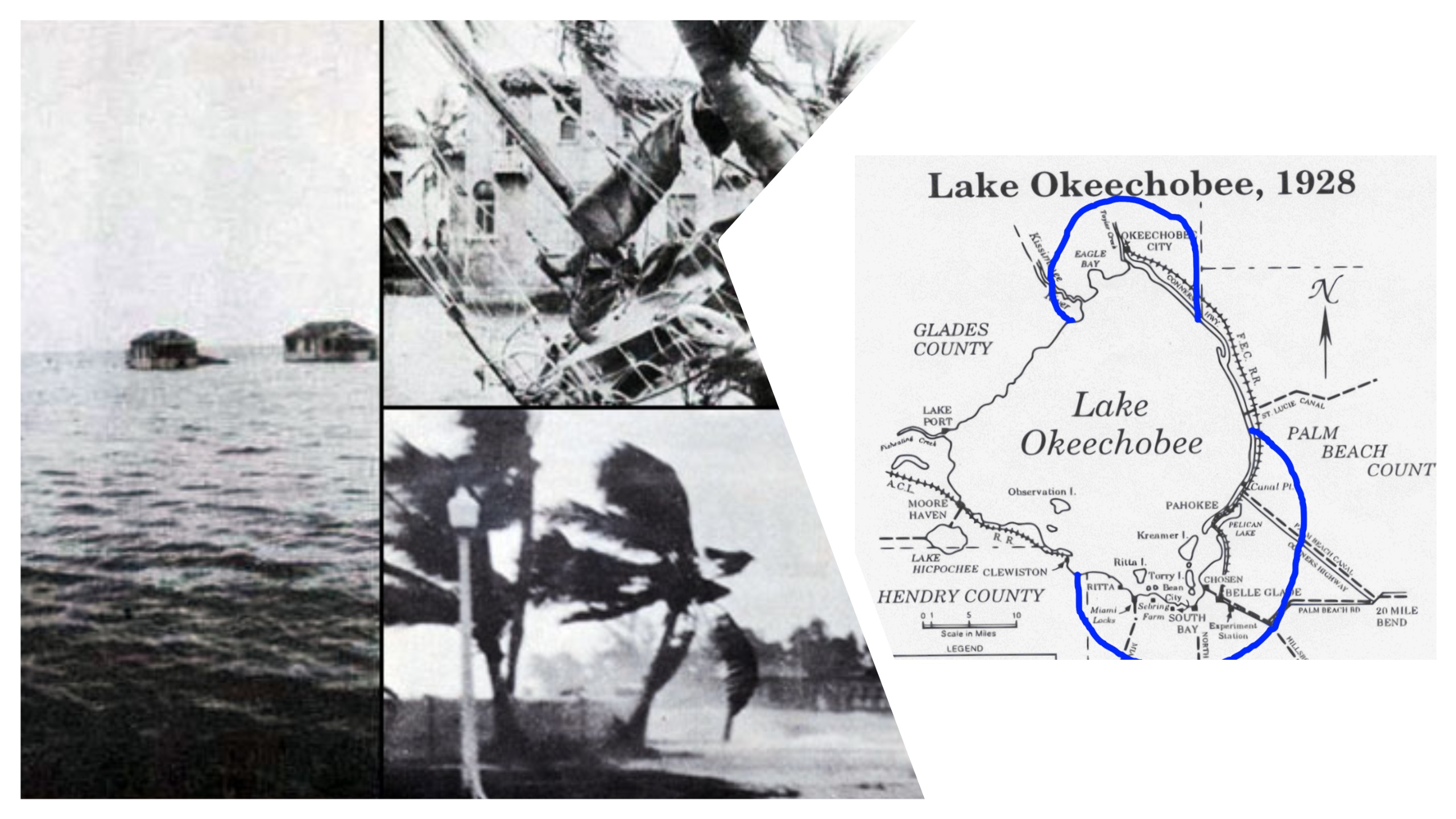
One hundred years ago, a powerful hurricane swept across South Florida and sent a wall of water from Lake Okeechobee into Moore Haven, killing an estimated 300 people and leaving much of the small community in ruins.
On Saturday, the Glades County Board of County Commissioners marked the 100th anniversary of the Great Miami Hurricane of 1926, remembering those who died and the residents who rebuilt after one of the deadliest disasters in the county’s history. “We remember the residents who experienced the storm, those who were lost due to the storm, and honor the resilience of those who worked to rebuild and move forward,” the county said in a statement.
The hurricane struck South Florida on Sept. 18, 1926, making landfall near Miami early in the morning with little advance warning. The massive storm is estimated to have brought winds approaching 150 mph.
After devastating Miami and surrounding areas, the hurricane moved west across the state toward Lake Okeechobee.
Moore Haven was especially vulnerable. Unlike today, there was no strong federal dike surrounding Lake Okeechobee. The community was largely protected by a much weaker earthen barrier.
Powerful winds pushed lake water toward Moore Haven. A wall of water estimated at 10 to 15 feet swept into the community, flooding homes and businesses and destroying much of the town.
Hundreds of people were killed in Glades County. Bodies were recovered from the streets and surrounding areas, and some victims were never identified. Some were buried in mass graves, including at Ortona Cemetery. Other victims were buried at Pinecrest Cemetery in Sebring.
The disaster came at a time when residents had few of the warnings and evacuation options available today. Weather forecasting was limited, roads were primitive and there were no smartphones, television alerts or modern emergency systems.
For many residents, the railroad became a lifeline.
Moore Haven had received rail service only five years earlier, in 1921. After the hurricane, trains came from Sebring carrying supplies and helping survivors escape the flooded community.
“Hundreds of people rode out on the train,” U.S. Sugar railroad superintendent Scott Ogle said told WINK News an interview about the storm’s history.
It did not matter what type of rail car was available, he said. The goal was simple: “Get as many people on that train as we can. Let’s get them to safety.”
Much of Moore Haven remained underwater for weeks.
The hurricane became known as the Great Miami Hurricane because of the destruction it caused after first striking Florida’s east coast. But its impact extended across South Florida, and in Glades County it became one of the defining tragedies in Moore Haven’s history.
The disaster also demonstrated the danger Lake Okeechobee could pose to surrounding communities during major hurricanes. Two years later, an even deadlier hurricane struck the lake region, eventually helping lead to the construction of a much stronger system of flood protection around the lake.
A century later, Glades County officials said the lessons of 1926 remain important. “The storm left a lasting mark on the history of Glades County and serves as a reminder of the vulnerability of our communities to powerful tropical systems,” the Board of County Commissioners said.
The county said remembering the disaster is also a reminder of the importance of hurricane preparedness, emergency planning and neighbors helping one another.
“A century later, its history remains part of the story of Moore Haven and Glades County,” the county said. “We remember. We learn. We prepare.”